


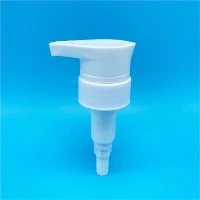
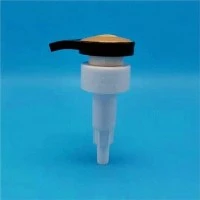

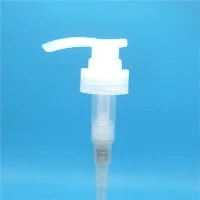
If you've spent any time working in the cosmetic, personal care, or pharmaceutical packaging space, you've probably run into the Pump 24/410 along the way. It's one of the most common pump sizes out there-used for everything from lotion bottles to travel-sized skincare-and it's easy to write it off as a "one-size-fits-all" part that doesn't need extra attention. But as a supplier who's spent years troubleshooting, customizing, and shipping pumps like this, I can tell you that the question "Does Pump 24/410 need a special control system?" isn't a random one. It's a question that comes up all the time, from small startup brand owners who're building their first line to big packaging engineers who've been at it for decades. The short answer? It depends, but skipping a tailored control system for your Pump 24/410 can lead to headaches that range from inconsistent product dosing to clogged pumps, and even lost product in the long run.
First, let's ground this in what a Pump 24/410 actually is, because that base matters for why control systems come into play. The numbers aren't just arbitrary: "24" refers to the 24-millimeter outer diameter of the pump's collar (the part that screws onto the neck of your bottle), and "410" is the 410-micrometer size of the dip tube's screen-though it's often shorthand for the pump's standard pour output too. For most people, that pump is designed to dispense a set amount of product per press, usually between 1.8cc and 2.2cc, which is perfect for single-use applications like facial serums or moisturizers. But here's the thing: not all Pump 24/410s are created equal, and neither are the products they're paired with. That's where a control system comes in-think of it as the set of checks and balances that makes sure the pump works the way it's supposed to, no matter the variable you throw at it.


Let's start with product viscosity, because that's the biggest variable that trips up Pump 24/410s. If you're putting a lightweight, runny lotion into a pump, you might think a standard off-the-shelf pump works, but even then, a loose control system can cause issues. Wait till you pair it with a thicker product, like a shea butter-based lotion or a gel serum. Standard control systems are built for mid-range viscosity, but if your Pump 24/410's control system doesn't account for that thickness, you'll get either too little product per press (forcing customers to press multiple times, which leads to frustration and returns) or too much (wasting product and messing with your product's intended usage rate). I've seen brands ship a line of thick body lotions with a basic control system only to find 15% of pumps were dispensing 0.5cc less than promised, which tanked their early reviews. For context, the pumps we supply, like the Lotion Pump 24mm 2CC, already has a built-in control that calibrates dosing to a tight 2cc, but pairing that with a custom control system ensures it stays consistent even when your product's viscosity shifts slightly (which it will-temperature changes, ingredient settling, all that).
Another big factor is the packaging process itself, especially for brands doing high-volume production. When you're running a filler line that's pumping out hundreds of bottles an hour, a standard control system for your Pump 24/410 might not line up with your line's speed or the type of bottle you're using. For example, if you're using a plastic bottle that's slightly warped (which is super common with injection molding), a basic pump collar might not sit flush against the bottle neck. That creates a gap, which leads to air getting into the dip tube, which makes the pump sputter or stop working halfway through production. A special control system here would adjust the pump's collar tension to fit your specific bottle, so even minor molding variations don't cause issues. We've had a client who was using a standard 24mm bottle for their travel-sized moisturizer, and their filler line was experiencing a 8% failure rate because of pump seal issues. Switching to a control system tailored for their bottle fixed that problem overnight, and they started using the Personal Cosmetic Dispenser Pump 2.0CC-another pump in our line that's calibrated for that exact bottle size-and cut their line errors to less than 1%.
Then there's sustainability, which is a huge push right now in the packaging world. A lot of brands are switching to thinner plastic bottles or using PCR (post-consumer recycled) plastic to reduce their carbon footprint. But thinner bottles mean less structural rigidity, so a standard control system's pump collar might put too much pressure on the bottle neck, causing it to crack during filling or shipping. A special control system for Pump 24/410s adjusts the pump's pull force-how hard you have to press it-to match the bottle's strength, so you don't have to choose between sustainable packaging and pump performance. We work with a brand that switched to 30% PCR plastic bottles and was dealing with 12% pump-related breakage until we implemented a custom control system for their Pump 24/410 line. They now use our White 24MM Liquid Dispenser, which has a reinforced collar that pairs with a low-tension control, and their breakage rate is down to 1%. Plus, that control system also reduces product waste-no more spilled lotion during filling, which adds up to thousands of dollars saved a year.
Wait, but let's not act like every Pump 24/410 needs a full custom control system. If you're a small brand making a lightweight lotion for personal use, and you're only doing a few hundred units a month, a standard control might work just fine. The question is more about matching the control system to your specific needs, not just slapping one on because it's a Pump 24/410. For example, if you're a startup testing a new product, you might start with a standard pump, but once you scale to 10k+ units, a small investment in a specialized control system will save you from costly reworks and unhappy customers. I've seen startups that skipped this step early on and ended up having to re-label their entire product line because of inconsistent dosing, which cost them way more than a custom control system would have.
Another angle: regulatory compliance, especially if you're making pharmaceutical or OTC products. The FDA has strict rules about consistent dosing and minimal product contamination, and a basic control system might not meet those requirements. A special control system for your Pump 24/410 would include features like sealed dip tubes to prevent bacteria growth, calibrated dosing that's trackable per batch, and tamper-evident seals that meet FDA standards. We supply a lot of pharmaceutical pump lines, and many of them use our Cosmetic Pump (adapted for their needs) along with a control system that's auditable, so they can show regulators exactly how each pump performs. That's not something a standard control can do-you need a tailored system to meet those specific rules.
And let's talk about user experience, which is make or break for brand loyalty. If your Pump 24/410 is too hard to press, customers will get frustrated and leave negative reviews. If it's too easy, they might press it by accident in their bag, spilling product all over their other stuff. A special control system adjusts the actuation force (the amount of pressure needed to press the pump) to match your target audience. For example, if you're making a hand lotion for kids, you want a softer press, while a heavy duty lotion for construction workers needs a firmer press. We had a client making a hand cream for mechanics, and their initial standard Pump 24/410 was too soft-they were getting reviews saying the pump leaked in tool bags and was too easy to trigger. Switching to a control system with a higher actuation force fixed that, and they also added our Lotion Pump With Ribbed Closure, which makes the pump harder to open accidentally, and their customer complaints dropped by 90%.
Now, I know some of you might be thinking, "I've used Pump 24/410s for years without a special control system, so why change?" That's fair-for low-volume, simple products, it's not a must. But the key here is that a control system isn't just an extra cost; it's a way to align your pump with your product, your packaging, and your customers. It's not about making the pump more complicated, it's about making it work better for your specific use case. As someone who's in the thick of supply chain and packaging every day, I'll tell you: the worst mistakes in packaging are the ones where you assume a standard part will work for your unique needs. A Pump 24/410 is a workhorse, but that doesn't mean it doesn't need a tailored touch to perform at its best.
If you're in the market for a Pump 24/410 and you're wondering if a special control system makes sense for your brand, don't hesitate to reach out to us. We've helped brands of all sizes-from tiny startups to large corporations-figure out the right pump and control system combo for their products, no one-size-fits-all nonsense. Whether you need a quick consult on viscosity matching, a custom control for your production line, or a full turnkey pump solution, we're here to help.
References
- Cosmetic Packaging & Design Association (2023). Pump Performance and Packaging Integration Report.
- International Society of Pharmaceutical Engineers (2022). Regulatory Compliance for Liquid Dispensing Pumps.
- Packaging Digest (2023). Sustainability in Pump Packaging: Balancing Cost and Performance.
- Journal of Applied Cosmetology (2022). Viscosity Effects on Dispenser Pump Dosing Accuracy.