



When I first started as a supplier of 4.0mL ± 0.04mL corrosive liquid packaging solutions, I thought the hardest part was just making sure the volume stayed within that tiny tolerance. Turns out, the real challenge is helping customers figure out how to measure that accurately-especially when the liquid you're handling eats through cheap tools like plastic cups or regular pipettes. Corrosive liquids don't play nice, and even a 0.04mL off could mean your product is either too concentrated (harming your users) or too diluted (wasting money on ingredients). So let's break this down, straight talk, no fancy lab jargon that makes your eyes glaze over.
First, let's get the tolerance straight: ±0.04mL on a 4.0mL total is 1% error. That's not a number you can eyeball or guesstimate. If you're working with something like a harsh cleaning solution, acid-based sanitizer, or industrial chemical, even a tiny miscalculation can lead to inconsistent dispensing, leaks, or safety risks. The tools you use for measuring have to be corrosion-resistant and calibrated for that exact narrow range. A lot of folks reach for regular pipettes first, but wait-most standard pipettes aren't built for corrosive stuff. They might have plastic components that get eaten away over time, throwing your measurements off mid-use. And disposable ones? Don't even bother-you'll get 0.1mL differences between the first and tenth pipette because of manufacturing inconsistencies.
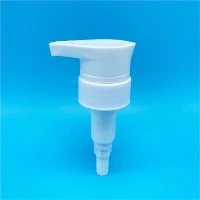
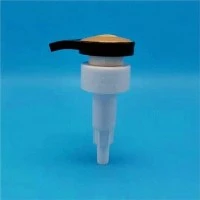
Let's talk about the right tools for the job. I've seen customers waste so much cash on cheap pumps that break within a week. If you need to dispense 4.0mL consistently, a good pump is non-negotiable. I always point people to our Lotion Pump With Large Dosage 5.0CC because it's designed for higher volumes than standard pumps, but with a simple adjustment, it locks in at 4.0mL-exactly the tolerance you need. The large dosage chamber means less wear from corrosive liquids, too, so it stays accurate longer than smaller pumps. Another pick is the Screw Up Lotion Pump; its threaded design lets you fine-tune the dispense volume by turning the pump head, so you can dial it right to 4.0mL and lock it in tight. No more guessing if the pump is primed right or if it's dispensing too much-this one's adjustable enough for that ±0.04mL range.
Wait, but even the best pump is useless if you don't test it properly. I recommend doing a quick volume check every time you switch batches of corrosive liquid, or once a week if you're using the same pump regularly. Here's how to do it without fancy lab gear: grab a lightweight, precise scale (something that measures to 0.001g-super affordable online) and a beaker made of borosilicate glass (that's the heat-resistant, chemical-proof kind you see in school labs). Corrosive liquids have known densities-for example, a 10% acid solution is about 1.05g/mL, so 4.0mL would be 4.2g. That's your target. Pump the liquid into the beaker three times, weigh it, and see where it falls. If it's 4.1g, that's 3.9mL-too low, tweak the pump a little. If it's 4.3g, that's 4.1mL-too high. You can adjust the Screw Up Lotion Pump in 0.01mL increments if you do it slowly, which is perfect for hitting that 1% tolerance.
But wait, scale maintenance is key. Corrosive fumes or splatters can get into the scale's internal parts over time, throwing off readings. I make sure all my customers wipe their scale down with a neutralizing solution (like a weak baking soda mix) after every use, and calibrate it once a month with a standard weight you can buy cheaply from lab supply stores. If you skip that, your volume measurements will be off before you even start adjusting the pump. And don't forget about priming the pump-corrosive liquids can leave bubbles in the chamber, which make you pump too much air and not enough liquid. Prime it by pumping 5-10 times into a waste container before you start measuring, and do another prime every time you switch between liquid types (even if they're both corrosive-different densities can change how the pump works).
Another mistake I see: using the wrong pump size. If you use a pump meant for 2.0mL, even if you adjust it, the internal parts are too small for corrosive liquids, so they'll corrode fast and start leaking or dispensing unevenly. The Hand Soap Plastic Pump 28mm is a solid option for smaller containers, but if you need 4.0mL, go with something with a wider chamber-like the Lotion Pump With Large Dosage 5.0CC. The 28mm pump works for 250mL or 500mL bottles, but for the precision you need, the larger chamber is worth the extra $0.02 per unit. It might not sound like much, but when you're ordering 100,000 pumps, that adds up to consistent accuracy, not wasted product.
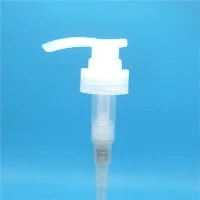
What about if you're dispensing into a container that needs a snug fit? The 33 410 Transparent Body Lotion Pump is great for that-its 33mm neck fits most standard plastic and glass bottles, and the transparent body lets you see if there's a bubble before you measure. No more guessing if the pump is full or half-empty; you can spot air pockets right through the plastic, which saves you from wasting liquid on bad measurements. I tell customers who deal with thick corrosive liquids (like acidic gel cleaners) to use this one because the transparent body makes priming way easier-you can see when all the air is out.
Let's touch on safety, too. Corrosive liquids don't just mess with your measurements-they mess with tools if you don't handle them right. All the pumps I sell are made with chemical-resistant materials (PP and PE, specifically), so they won't break down when they come into contact with your liquid. But you still shouldn't reuse disposable pipettes for corrosive stuff, and you should never measure with a glass cylinder that's not labeled for chemical use. I once had a customer who used a regular plastic graduated cylinder for their acid-based liquid, and within a week, the cylinder had a crack-they lost a whole batch of product, plus had to clean up a chemical spill. Don't be that guy.
Now, here's a trick for keeping measurements consistent over thousands of units: record every pump's adjustment number. If you're using the Screw Up Lotion Pump, write down the number you turned it to (like "3 full turns from closed = 4.0mL") and stick it to the pump's box. That way, when you replace a pump in a production line, you don't have to re-adjust from scratch-you just match the number. It sounds small, but on a production run of 10,000 bottles, that saves hours of time and keeps every bottle within that ±0.04mL range. I also recommend doing a sample test every hour during large runs-pull one bottle, measure its volume, and if it's off, adjust all the pumps instead of just one.


Wait, what if you don't have access to a lab scale? I get it, not every small business can drop $100 on a precision scale. You can use a volumetric flask instead-those are glass containers marked with exact volumes, and most are chemical-resistant. But here's the catch: make sure the flask is dry before you add your corrosive liquid. If there's water left in it, it'll dilute your liquid, so your volume measurement will be wrong. I always tell customers to rinse the flask with a small amount of their corrosive liquid first (and dispose of that rinse properly, of course) before doing the final measurement.
Let's address a common question: why does the tolerance matter so much? If you're a cleaning product brand, 0.04mL less per bottle might mean your customers have to use more of the product, leading to complaints and returns. 0.04mL more means you're wasting ingredients-if each bottle has an extra 0.04mL, that's 400mL extra per 10,000 bottles, which is about a liter of chemical you don't need to use. For industrial clients, that extra volume might mean they can't mix their solutions correctly, leading to equipment damage. So it's not just about accuracy-it's about saving money and keeping your product reliable.
Now, let's wrap this up with what I've learned over the years as a supplier. The key points are: use corrosion-resistant, high-dose pumps (like the Lotion Pump With Large Dosage 5.0CC or the Screw Up Lotion Pump), calibrate your scale or volumetric tool regularly, prime your pumps every time, and record your adjustments for consistency. Avoid cheap, small pumps that can't handle corrosive liquids or that don't have the precision for 4.0mL ±0.04mL. If you're still not sure which pump is right for your liquid, don't hesitate to reach out to chat through your needs-we've been helping businesses with corrosive liquid dispensing for years, and we can point you to the exact pump that fits your container and volume requirements. Don't take chances with measurements; a small investment in the right tools saves you from big headaches later.
If you're ready to source pumps or need more info on how to adapt your setup for 4.0mL ±0.04mL corrosive liquid, feel free to get in touch to discuss your specific application and order details.
References
- "Handbook of Chemical-resistant Plastics for Corrosive Liquid Handling" – Industrial Plastic Association, 2022
- "Precision Volume Measurement for Dispensing Systems" – Journal of Packaging Technology, 2021
- "Adjustable Lotion Pump Calibration Guidelines" – Packaging Machinery Manufacturers Institute, 2023
- "Density Calculations for Corrosive Aqueous Solutions" – Chemical Safety and Hazard Investigation Board, 2022