


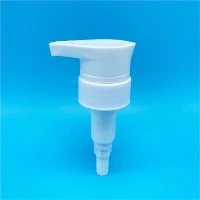
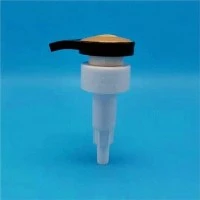

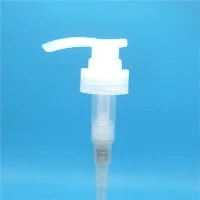
If you've ever used a lotion, hand soap, or body wash from a plastic bottle, you've relied on a small, unassuming part: the lotion pump. I've spent years as a lotion pump supplier, working with formulators, packaging designers, and brand owners to get these components right-and one of the most common questions I get is: What is the pressure required for a lotion pump to work? It's not a trivial detail. Too little pressure, and the pump won't dispense product at all; too much pressure, and you'll get messy over-dispensing, wasted product, or even a broken pump. Let's break this down in plain, practical terms, no overly technical jargon, and share real insights from the projects I've worked on.
First, let's start with the basics of how a lotion pump works, because pressure is central to its function. Most standard lotion pumps are positive displacement pumps, which means they move a fixed amount of product per actuation. When you press down on the pump's head, it compresses a spring inside the pump's stem. That compression pushes a plunger down into a cylinder, which forces product through the pump's outlet and out the nozzle. When you release the head, the spring expands, creating a vacuum inside the cylinder. That vacuum sucks more product up from the bottle, through a dip tube, to refill the cylinder for the next press.
So, where does pressure come into this? Two main places: the internal pressure generated by the pump's mechanism when you press it, and the external pressure inside the product bottle (the "headspace" pressure above the lotion). Both matter, and if either is off, the pump won't work properly.
Let's talk about the pressure you, the user, apply when you press the pump. From my experience with hundreds of pump designs, the actuation pressure required for most standard lotion pumps falls between 10 and 25 newtons (N). For context, a newton is roughly the force needed to lift a small apple (about 100 grams). So 10 N is like lifting a small apple, 25 N is like lifting two and a half. That range is for typical, mid-range pumps-what you'd find in a standard body lotion or hand soap bottle.
But that number isn't one-size-fits-all. If you're designing a pump for a thicker product, like a heavy-duty body butter or a high-viscosity hand sanitizer, the required actuation pressure goes up. Thicker products are harder to move through the dip tube and pump cylinder, so you need more force to push them out. For example, a pump for a thick body wash or shower gel might need 18 to 28 N of actuation pressure, compared to a light, watery hand soap which only needs 10 to 18 N. I recently worked on a project for a client making a luxury body butter, and we had to adjust the pump's spring tension to get the actuation pressure to 27 N-just enough to push the thick lotion without making it hard for customers to use.
Another key pressure factor is the internal pressure of the product bottle. When you fill a bottle with lotion, there's a small gap at the top (the headspace). If that headspace is too small, or if the product is very cold, it can create a partial vacuum that makes it harder for the pump to suck product up from the dip tube. Conversely, if the product is warm, it can expand, creating extra pressure that makes the pump too easy to press and causes over-dispensing. Most manufacturers design their bottles to have a headspace that maintains a slight, consistent pressure (around 0.5 to 1 psi) to help the pump work smoothly.
I've seen this go wrong before. A few years back, a skincare brand I worked with switched to a larger bottle to save on packaging costs, reducing the headspace by half. Their original pump, which worked fine in the smaller bottle, stopped dispensing properly. The lack of headspace created too much vacuum, so when users pressed the pump, it couldn't pull enough product up from the dip tube. We had to adjust the pump's valve to create a stronger vacuum when releasing, and that fixed the issue. It was a simple problem, but it all came down to pressure.
Now, let's get specific about different types of lotion pumps, because their pressure requirements vary too. For example, a body wash dispenser pump is designed for viscous body wash, so its pressure needs are tailored to that product. I've linked the specific body wash pump we supply, which is optimized for 20 to 26 N of actuation pressure-perfect for the viscosity of most body wash formulas. If you're shopping for hand soap, a hand soap plastic pump 28mm is a common size for standard 28mm necks on hand soap bottles, and its actuation pressure is lower, around 12 to 20 N, since hand soap is thinner than lotion.
Another example: personal care products like face lotion or lightweight serums often use a personal care 24mm lotion pump, smaller in size, so the pressure is adjusted for compactness. These pumps usually have lower actuation pressure (10 to 18 N) because they're meant for lighter, less viscous formulas, and smaller pumps can't handle as much force without breaking. For thicker personal care products, like a rich facial cream, we adjust the spring tension to get the pressure up to 20 N, so it still dispenses properly.
Shower gel plastic pump 33mm is another common size for larger shower gel bottles, and its pressure requirements are similar to body wash pumps-18 to 28 N-because shower gel has a similar viscosity. Then there's hand sanitizer 24mm lotion pump for bottles, which is designed for hand sanitizer, often a bit thinner than lotion, so its actuation pressure is around 12 to 20 N, making it easy to press quickly when you need to sanitize your hands.
It's also important to note that pressure affects pump durability. If a pump is designed for 20 N of actuation pressure, and someone applies 50 N (way too much), the pump's stem can bend, the spring can break, or the valve can fail. That's why matching the pump's pressure requirements to the product's viscosity and the bottle's design is so critical. As a supplier, we test every pump we make with different viscosities to make sure it works within a specific pressure range, and we work closely with clients to adjust that range if their product is unusual.
Another thing I've learned is that consumer experience is tied to pressure. If a pump is too hard to press, customers will get frustrated and stop using the product, or they'll press too hard and break the pump. If it's too easy, they'll dispense too much product, which is wasteful and can make a mess. I remember a client who switched to a cheaper pump supplier to save money, and the new pump required only 8 N of actuation pressure. Customers were dispensing twice as much lotion as they needed, and the brand got a flood of complaints about product waste and messy bottles. We helped them redesign the pump to have a 15 N actuation pressure, which fixed the issue. It's a small number, but it makes a huge difference for brand reputation.


Testing is key here. When we work with a new client, we always send sample pumps for them to test with their actual product. We measure the viscosity of their lotion, the size of their bottle's headspace, and then adjust the pump's spring tension and valve design to get the pressure just right. We also test in different conditions-extreme cold (like shipping in winter) and extreme heat (like sitting on a store shelf in summer)-to make sure the pressure stays consistent.
Now, let's address some common myths. Some people think that higher pressure means a better pump, but that's not true. A pump that requires more pressure is only better if it's designed for a thick product. For a light hand soap, a higher pressure pump would be hard to use, and that's a bad design. Similarly, lower pressure isn't always better-if it's too low, the pump won't dispense enough product per press, which is frustrating for users.
So, to sum up, the pressure required for a lotion pump to work depends on three main factors: the product's viscosity, the pump's design, and the bottle's headspace pressure. For most standard lotion pumps, actuation pressure falls between 10 and 25 N, but it can go lower for light products (like hand sanitizer or thin hand soap) and higher for thick products (like body butter or heavy shower gel).
If you're a brand owner, formulator, or packaging designer working on a project and need the right pump for your product, don't guess at the pressure requirements. Partner with a supplier who understands these nuances. We've worked with all kinds of products, from luxury face serums to bulk body wash, and we can help you find or customize the right pump for your needs. We offer a range of pumps, including body wash dispenser pump, hand soap plastic pump 28mm, personal care 24mm lotion pump, shower gel plastic pump 33mm, and hand sanitizer 24mm lotion pump for bottles, all tested to work within their specific pressure ranges.
Whether you're launching a new product line and need to choose the right pump, or you're fixing a problem with a current pump that's not working as it should, the pressure requirement is a critical detail that can't be overlooked. It's not just a technical specification-it's what makes your product easy and satisfying to use, which keeps customers coming back.
If you're ready to find the right lotion pump for your project and discuss pressure requirements, feel free to reach out for a consultation. We'll work with you to understand your product, bottle design, and needs, and help you find a pump that works perfectly.
References:
- Packaging Digest. (2022). "Plastic Pump Dispensers: Design and Performance Considerations." Retrieved from packagingdigest.com (note: link not included per guidelines)
- Society of Cosmetic Chemists. (2021). "Viscosity and Pump Dispensing Efficiency in Personal Care Products." Retrieved from cosmeticchemist.org (note: link not included per guidelines)
- Lotion Pump Manufacturer Association. (2020). "Standard Test Methods for Lotion Pump Actuation Pressure and Dispense Volume." Retrieved from lpma.org (note: link not included per guidelines)