





Understanding methods for testing foam quality
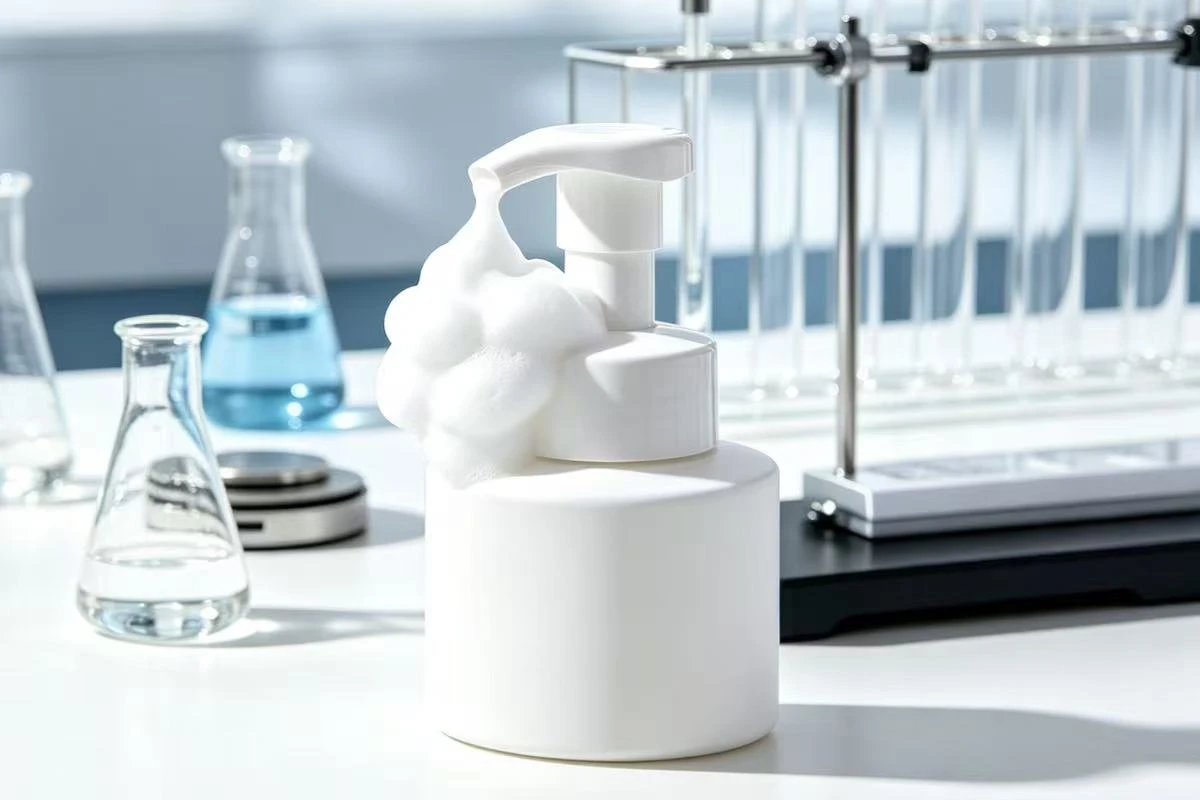
Foam pumps are widely applied in daily chemical cleaning, personal care, medical disinfection, industrial cleaning and many other fields. Unlike ordinary liquid pumps, they can mix air and liquid evenly to produce fine, uniform and stable foam, which improves product utilization, reduces waste and enhances user experience. High-quality foam is the core guarantee of product performance, directly affecting the use effect of detergents, hand sanitizers, facial cleansers and foam-based industrial supplies. Therefore, professional and systematic foam quality testing is essential to control product stability and market competitiveness.
Foam quality evaluation covers multiple core indicators including fineness, uniformity, stability, foaming volume, density and resilience. Combined with national GB standards and international ASTM/ISO testing specifications, we adopt standardized, repeatable testing procedures to screen qualified foam quality and eliminate defective products fundamentally.
1.Foam Fineness & Uniformity Test
Fineness and uniformity are the most intuitive indicators of foam quality. Qualified foam presents tiny, consistent pores without large bubbles, hollow blocks or layered segregation. Adopt visual microscopic inspection and manual sampling verification: under standard ambient temperature (25℃±2℃), press the foam pump continuously and stably to extrude complete foam samples. Observe the bubble pore size distribution through a high-definition microscope. High-quality foam features uniform pore size, no obvious large bubbles, smooth and dense texture, which ensures even coating and mild use. Foam with uneven pores, sparse structure or sporadic large bubbles is judged unqualified, as it will cause uneven use effect and poor user experience
2.Foam Stability & Half-Life Test
Foam stability determines the lasting effect of use and is the core index of foam quality. Can follow the classic Ross-Miles foaming test method and industry standard settling rate detection. Extrude a fixed volume of foam into a standard graduated cylinder, place it in a constant temperature and humidity environment, and record the foam state changes in real time. Observe the foam collapse speed, liquid precipitation degree and layered condition within the specified time. Qualified foam has a long half-life, slow collapse speed, and the settling rate and water bleeding rate are controlled within the industry qualified standard (settling rate ≤5%). It will not collapse rapidly, leak liquid or thin out in a short time, ensuring long-lasting use effect. Unqualified foam collapses quickly with obvious liquid precipitation, failing to meet daily and industrial use requirements.
3.Foaming Volume & Density Test
Foaming volume and density reflect the mixing uniformity of air and liquid of the foam pump, which is an important basis for judging pump body performance and foam quality. In accordance with GB/T 6343-2009 foam density detection standards, testing the mass and volume of standard foam samples, calculate the apparent density of foam, and verify the foaming multiplying power. Under standard test conditions, the foam produced by qualified pumps has stable foaming volume per press, moderate density, neither too fluffy (easy to collapse) nor too dense (poor fluidity). Consistent foaming volume in each press ensures stable product output and accurate dosage control, avoiding raw material waste caused by insufficient foaming or excessive liquid output.
4.Pressure Resistance & Durability Foam Test
In actual use, foam pumps need to adapt to continuous pressing and different pressing forces. Should conduct long-term cycle pressing tests: simulate daily repeated pressing scenarios, test the foam state after 10,000+ continuous presses, and check whether problems such as foaming failure, uneven foaming and sudden liquid leakage occur. Qualified products can maintain stable foam fineness, volume and stability after long-term use, with no attenuation of foaming performance. This test effectively verifies the durability of foam quality and ensures consistent use effect in the whole product life cycle.
Rongsen leverages its standardized production workshops and comprehensive quality control system to achieve end-to-end quality management in product manufacturing. Strictly adhering to national and international foam testing standards, all foam pumps undergo four core tests-fineness, stability, density, and durability-before leaving the factory, preventing substandard products from entering the market. With mature production processes, stable product performance, and customized solutions, Rongsen can precisely meet the foam quality requirements of various industries, providing clients with high-quality, highly stable foam pumps and comprehensive quality assurance.